
D2C brand stores
Direct to consumer stores with strong product storytelling, bundles, subscriptions and reviews. Shopify development is usually our first recommendation here because merchants can run it day to day without a developer.
We build online stores around your products, your margins and the way your customers actually buy, from a single D2C brand to a wholesale portal with account pricing.
An online store is part shop window, part warehouse system and part payments desk. A capable ecommerce website development company has to understand all three. The product page can be beautiful, but if stock levels are wrong, shipping rates are off or the checkout asks for too much, the order never arrives.
SIZ Group has designed and developed 678 apps for more than 465 clients since 2018, and several of our portfolio designs are commerce products: a sports ecommerce store, a workspace furniture store, a gaming gear store and a grocery delivery app with live order tracking. That work taught us how buyers browse, compare and abandon carts on small screens, and we bring the same thinking to web stores.
We start every project by looking at your catalog and your operations rather than a theme gallery. How many products and variants do you sell? Do wholesale buyers see different prices? Who ships the orders, and from where? The answers decide the platform, the data model and the checkout, long before any design work.
If you sell a handful of products to consumers and want to launch quickly, a hosted platform with a well chosen theme may be all you need. We will say so. Custom work is for stores whose catalog, pricing or fulfillment does not fit the default path.
Pick one service or combine them into a full store build.
Direct to consumer stores with strong product storytelling, bundles, subscriptions and reviews. Shopify development is usually our first recommendation here because merchants can run it day to day without a developer.
Customer specific price lists, minimum order quantities, quick order forms by SKU, net terms and approval flows for buyers who order on behalf of a company. Reorders from past invoices save your sales team hours.
One back office running several storefronts, each with its own look, domain and product range. Shared inventory and customer data stay in one place while each brand keeps its identity.
Stores for manufacturers selling to end customers for the first time, with care taken around distributor pricing, spare parts lookup and technical documentation on product pages.
Guest checkout, address lookup, wallet payments, clear shipping costs and fewer form fields. We review your funnel data and fix the steps where buyers drop out.
Moving products, customers, order history and URLs from an old platform to a new one. Redirects are mapped page by page so search rankings and bookmarks keep working.
Most store problems are data problems. Duplicate SKUs, variants set up as separate products, missing weights that break shipping rates and images with no alt text all cost sales quietly. We clean and structure product data before launch, because a store is only as good as the catalog behind it.
We hire only the top 4% of developer applicants and the team brings more than 10 years of collective experience. You work with one team from kickoff through launch, and you own the store, the data and the accounts.
Talk to usOne team from first call to launch, with demos at every milestone.
We look at your products, variants, price rules and fulfillment setup, and agree who your buyers are. This review decides between Shopify, WooCommerce or a headless build.
We plan collections, filters, product attributes and URL structure, and define how prices, stock and orders move between the store and your other systems. Migration mapping starts here if you are switching platforms.
Home, collection, product, cart and checkout screens are designed mobile first and shared as a clickable prototype. We test the path from landing page to order confirmation before building it.
We build the theme or front end, configure payments, tax and shipping, and import cleaned product data. Apps and integrations are added only where they earn their place, since each one adds weight and cost.
Test orders run through every payment method, discount type and shipping zone. After launch we watch orders, errors and page speed closely and ship fixes and improvements under a support plan.
Hosted, open source or headless, chosen to fit your catalog and team.
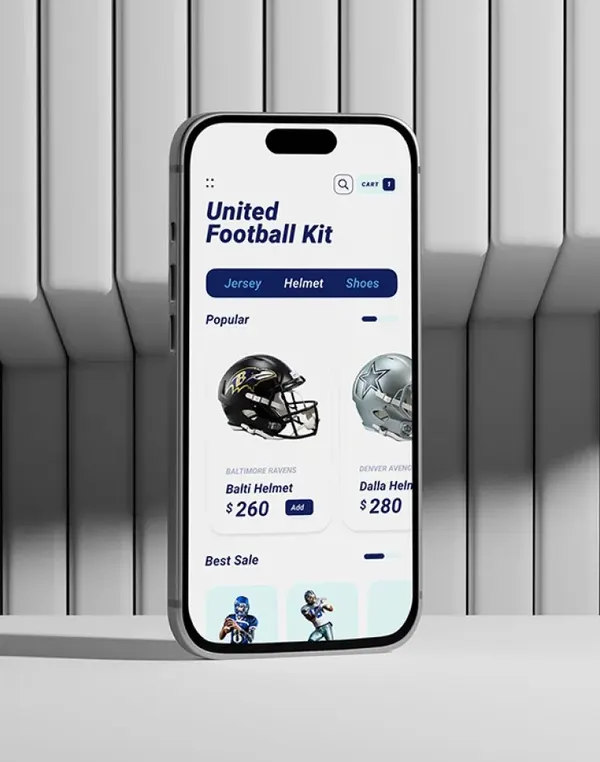
Size and color variants, fit guides and lookbooks. Our sports ecommerce store design shows how gear and content can share one experience.
Large images, configurable options, freight shipping and delivery scheduling, as in our workspace furniture store concept.
Spec comparison, compatibility filters and bundles, drawn from our gaming gear store design.
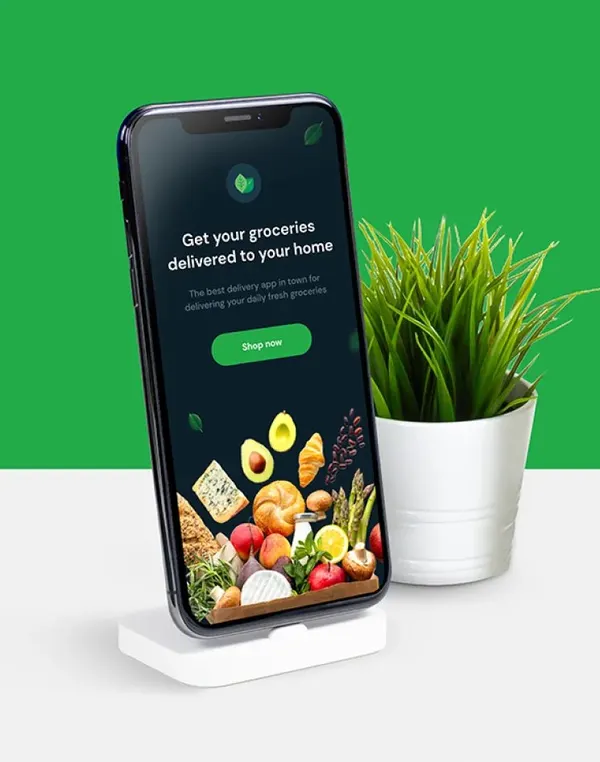
Substitutions, delivery windows and order tracking, the same problems our grocery delivery design with live tracking solves.
Store cost depends mostly on catalog complexity and operations. A few dozen products with simple variants on a hosted platform is a modest build. Thousands of SKUs, customer specific pricing, several storefronts or a headless front end add design, data and testing work.
Migrations, custom checkout logic and connections to inventory, accounting or 3PL systems are the other big factors. Platform subscription fees, payment processing and paid apps are ongoing costs paid to those providers, and we list them in the proposal so there are no surprises.
We do not publish a fixed price for ecommerce work because no two catalogs are alike. Pricing is scoped and quoted in writing after a free call where we review your products, platform and goals.
Every project is scoped on a free call and confirmed in writing before work starts.
Detailed plans for 250 US industries, from HVAC contractors to specialty retailers.
Ask how they handle product data, payments, tax and shipping, not just design. A good partner reviews your catalog and operations first, explains platform trade-offs plainly and tests real orders before launch. They should also hand you full ownership of the store and its data.
Shopify is hosted, secure out of the box and easy for merchants to run, which suits most D2C brands. WooCommerce development makes sense when you already run WordPress, want full control over hosting and data, or need content and commerce tightly mixed. We recommend one after looking at your catalog and team.
Headless commerce separates the storefront from the commerce engine, so the front end can be built with a framework like Next.js while Shopify or another platform handles products and checkout. It gives speed and design freedom but costs more to build and maintain. Most stores do not need it at launch.
Yes. Wholesale buyers can log in to see their own price lists, order minimums and payment terms while retail shoppers see the public store. Depending on the platform this is either one store with customer groups or a separate wholesale storefront sharing the same inventory.
Not if the migration is planned. We map every product, collection and page URL to its new address with permanent redirects, keep titles and descriptions, and check crawl errors in Search Console after launch.
Yes. Inventory, order and accounting connections are handled by our ecommerce integrations team. We scope them as part of the store build so the data model supports them from the start.
Book a free call to review your catalog and get a written quote for your ecommerce build.